Nitrile vs. Latex Examination Gloves: A Doctor's Barrier & Clinical Guide
A comprehensive, evidence-based comparative review for hospital administrators, infection control committees, surgeons, and medical staff. Examining immunogenic allergy profiles, puncture mechanics, chemical permeation dynamics, and total cost of care.
Two Distinct Barrier Technologies
While both materials meet stringent medical AQL 1.5 water-tightness specifications, their molecular structures dictate radically different clinical strengths, chemical resistances, and allergic risk profiles.
Synthetic Nitrile (NBR)
Acrylonitrile-ButadieneEngineered from synthetic petroleum polymers, Nitrile provides an impenetrable synthetic barrier that is completely free of natural bio-allergens. It is the international standard for emergency wards, inpatient units, oncology suites, and dental practices.
Natural Rubber Latex (NRL)
cis-1,4-PolyisopreneDerived from the sap of Hevea brasiliensis trees, natural rubber latex remains the biological benchmark for anatomical elasticity, low modulus of resistance, and second-skin tactile feedback during complex tactile procedures.
Head-to-Head Specification Matrix
Every parameter benchmarked against ASTM standards, European Norms (EN 455), and occupational infection control mandates.
| Clinical Parameter | Nitrile Gloves (Synthetic NBR) | Latex Gloves (Natural Rubber) |
|---|---|---|
Base Material & Polymer Structure CompositionVerdict: Nitrile eliminates bio-protein variability; Latex is a renewable natural elastomer. | Acrylonitrile Butadiene Copolymer (100% Synthetic) | Natural Rubber Latex (Hevea brasiliensis Tree Sap) |
Type I Allergy Risk (Immediate IgE Hypersensitivity) ImmunologyVerdict: Nitrile mandatory for emergency admissions & universal latex-free precautions. | 0% Risk (0 µg/dm² protein). Completely safe for latex-allergic patients and staff. | Active Risk. Contains plant proteins (Hev b 1–13). Low-protein washing reduces to < 50 µg/dm² per ASTM D5712, but does not eliminate risk. |
Type IV Allergy Risk (Delayed Chemical Contact Dermatitis) ImmunologyVerdict: Tie. Both materials require accelerator-free formulations for chronic contact dermatitis sufferers. | Low to Moderate. Associated with chemical vulcanization accelerators (dithiocarbamates/mercaptobenzothiazoles). | Low to Moderate. Associated with rubber vulcanization accelerators (thiurams/carbamates). |
Puncture Resistance (ASTM D6319 vs ASTM D3578) Barrier SafetyVerdict: Nitrile significantly reduces accidental sharps penetration during high-risk interventions. | Superior (~3× higher puncture resistance than natural rubber of identical gauge). | Moderate puncture resistance. Vulnerable to fine sharps, needle tips, and wire edges. |
Barrier Failure Mode & 'Tear Telltale' Barrier SafetyVerdict: Nitrile provides fail-safe visual notification of compromised barrier integrity. | Immediate Visible Tear. Pinholes instantly split upon puncture, giving immediate breach warning. | Micro-Pinhole Concealment. Punctures often self-seal or remain microscopic, risking occult fluid strikethrough. |
Cytotoxic Chemotherapy & Chemical Permeation Chemical ResistanceVerdict: Nitrile is clinically required for oncology infusion, central pharmacy, and histology. | Broad-Spectrum Resistance (Tested to ASTM D6978 for hazardous antineoplastic drugs, formalins, and alcohols). | Poor Chemical Resistance. Rapidly compromised by chemotherapy drugs, non-polar solvents, oils, and petroleum gels. |
Tactile Sensitivity & Tensile Elongation ErgonomicsVerdict: Latex maintains ergonomic supremacy for ultra-fine micro-manipulation & minimal tension. | High. Ultimate elongation ≥ 500% (initial) / ≥ 400% (aged). Thermal reaction relaxes polymer to hand shape within 3–5 min. | Exceptional Gold Standard. Ultimate elongation ≥ 700% (initial) / ≥ 580% (aged). Unrivaled anatomical stretch & low modulus. |
Tensile Strength & Force at Break (EN 455-2) Physical PropertiesVerdict: Latex provides marginally higher raw tensile strength under severe multi-directional shear. | Tensile baseline 18.5–21.0 MPa; Force at Break ≥ 7.0 N (meets EN 455-2 standard requirement ≥ 6.0 N). | Tensile baseline 21.5–24.0 MPa; Force at Break ≥ 8.5 N (meets EN 455-2 standard requirement ≥ 6.0 N). |
Water Leak Pinhole Quality (AQL) Regulatory StandardVerdict: Equal clinical water-tightness baseline. | AQL 1.5 Medical Examination Grade (Hydrostatic 1000ml test per EN 455-1 / ASTM D5151). | AQL 1.5 Medical Examination Grade (Hydrostatic 1000ml test per EN 455-1 / ASTM D5151). |
Shelf Life & Environmental Stability LogisticsVerdict: Nitrile excels in multi-year hospital warehouse storage without polymer degradation. | 5-Year Shelf Life. Highly resistant to ambient ozone, UV exposure, and thermal oxidation. | 3 to 5-Year Shelf Life. Prone to dry-rot, ozone cracking, and accelerated aging if exposed to UV or heat. |
Cost per Procedure & Risk-Adjusted Value Health EconomicsVerdict: Latex is cheaper per box; Nitrile delivers lower total hospital risk-adjusted cost. | Moderate purchase cost, lowest liability cost. Eliminates allergy claims, decreases sharps tear frequency. | Lowest upfront purchase cost per box. Highly economical for routine, low-risk, non-allergic procedures. |
The Allergy Paradox: Type I vs. Type IV
Occupational latex sensitization affects an estimated 8–12% of regularly exposed healthcare workers. Universal latex-free precautions eliminate life-threatening Type I IgE anaphylaxis.
In clinical practice, cutaneous adverse reactions to medical gloves fall into two completely separate immunological categories. Understanding the distinction is vital when establishing hospital-wide procurement policies:
Type I Immediate Hypersensitivity (IgE-Mediated)
Triggered by water-soluble plant proteins (Hev b 1 through Hev b 13) naturally occurring in Hevea brasiliensis latex. Symptoms manifest within minutes of contact: localized urticaria, facial angioedema, rhinitis, wheezing, and in severe cases, fatal cardiovascular anaphylactic shock. Powdered latex gloves significantly exacerbate this risk by aerosolizing proteins attached to cornstarch particles.
Nitrile Advantage: Nitrile is a 100% synthetic petroleum polymer containing zero plant proteins (0 µg/dm²), completely eliminating Type I allergy risk.
Type IV Delayed Hypersensitivity (Cell-Mediated Allergic Contact Dermatitis)
Triggered not by natural rubber proteins, but by chemical vulcanization accelerators (thiurams, dithiocarbamates, mercaptobenzothiazoles) added during glove manufacturing to cross-link the elastomer. Symptoms typically appear 24 to 48 hours post-exposure, characterized by dry, itchy, erythematous papules, scaling, and blistering on the dorsum of the hands.
Clinical Fact: Type IV dermatitis can occur with both standard latex and standard nitrile gloves. Healthcare professionals suffering from confirmed Type IV accelerator sensitivity should utilize accelerator-free (low-dermatitis) nitrile gloves.
Puncture Dynamics & The 'Tear Telltale'
Needlestick and sharps injuries represent the primary vector for transmission of Hepatitis B, Hepatitis C, and HIV among clinical staff.
Under standardized ASTM F1342 puncture resistance testing, synthetic nitrile copolymer exhibits approximately 3× higher puncture force resistance compared to natural rubber latex of equivalent mil thickness. The tightly cross-linked acrylonitrile-butadiene chains resist puncture shear from hypodermic needle tips, dental burrs, and orthopedic bone fragments far longer than the softer cis-polyisoprene chains of latex.
The Critical 'Tear Telltale' Difference
When a natural rubber latex glove is pierced by a fine suture needle or probe, the natural elasticity of the elastomer causes the puncture hole to partially close or adhere upon needle withdrawal. As a result, the healthcare worker frequently remains unaware of the breach, allowing micro-leakage of infectious fluids to persist undetected for hours.
In contrast, synthetic nitrile exhibits a high tear-propagation characteristic upon physical puncture: the puncture site rapidly tears open in a visible line. While this prevents the glove from continuing to be used, it acts as an immediate, fail-safe clinical warning, compelling the clinician to immediately halt the procedure, wash hands, and replace the glove.
ASTM D6978 Chemotherapy Permeation
United States Pharmacopeia standard USP <800> mandates gloves tested specifically to ASTM D6978 for all personnel compounding or administering antineoplastic agents.
General chemical resistance is typically tested under ASTM F739 (breakthrough detection threshold: 0.1 µg/cm²/min). However, for oncology chemotherapy drugs and hazardous antineoplastic agents, this threshold is dangerously loose.
The medical standard ASTM D6978 establishes a threshold that is 10 times more stringent (0.01 µg/cm²/min), testing permeation resistance against high-risk cytotoxic agents including Carmustine (BCNU), Thiotepa, Cisplatin, Cyclophosphamide, Doxorubicin, Fluorouracil, and Paclitaxel.
Exhibits robust chemical inertness against antineoplastics, glutaraldehyde, quaternary ammonium disinfectants, and isopropyl alcohol hand rubs.
Hydrophobic cis-polyisoprene bonds are rapidly dissolved or swollen by petroleum jelly, mineral oil ointments, and rapidly permeated by carmustine and thiotepa.
Tensile Modulus & Hand Fatigue
Why surgeons and microsurgical specialists still revere natural latex when fine motor dexterity and extended operating times are paramount.
The ergonomic distinction between latex and nitrile is defined by tensile modulus—the amount of tensile force required to stretch the material by 300% (the 300% Modulus).
Natural rubber latex exhibits an extremely low tensile modulus. When a clinician flexes their fingers, latex exerts almost zero resistance, mimicking a biological 'second skin'. This explains why during 3- to 6-hour surgical operations, latex gloves cause significantly less hand fatigue, forearm cramping, and micro-tremors than early-generation nitrile formulations.
How Modern APbiosense Nitrile Bridges the Gap
Advanced thin-wall compounding in APbiosense Nitrile (4.0 mil fingertip) incorporates thermally responsive elastomeric polymers. Within 3 to 5 minutes of donning, the wearer's skin temperature (35°C) relaxes the synthetic cross-links, enabling the glove to mold precisely around the wearer's palm and knuckles, providing near-latex dexterity with 100% latex-free safety.
Department-by-Department Clinical Recommendations
Evidence-based glove allocation protocols designed for hospital infection control committees, clinic directors, and material management leads.
Hospitals & Emergency Care
Because emergency admissions present without prior allergy screening, universal nitrile adoption protects unsuspected latex-allergic patients from life-threatening anaphylaxis while shielding healthcare workers from occupational sensitization.
Dental Clinics & Oral Surgery
Dental procedures involve high-speed rotary burrs, sharp explorers, anesthetic needle recapping, and continuous exposure to saliva and blood. Nitrile delivers 3× higher puncture resistance and chemical immunity against acrylic resins.
Pathology & Diagnostic Laboratories
Laboratory personnel handle hazardous histology chemicals, formalins, xylene, staining reagents, and diagnostic blood tubes. Natural latex degrades rapidly in contact with organic solvents, making nitrile the mandatory barrier.
Operating Theatre & Surgical Suites
Surgeries extending past two hours require minimal glove tension to prevent surgeon finger cramping. Pre-curved sterile latex gloves provide the ultimate gold-standard in organic elasticity, tactile feedback, and double-gloving safety.
Explore APbiosense Medical Examination Gloves
Manufactured under ISO 13485 quality management systems, fully tested to AQL 1.5 water leak inspection, and ready for bulk hospital or clinic dispatch.
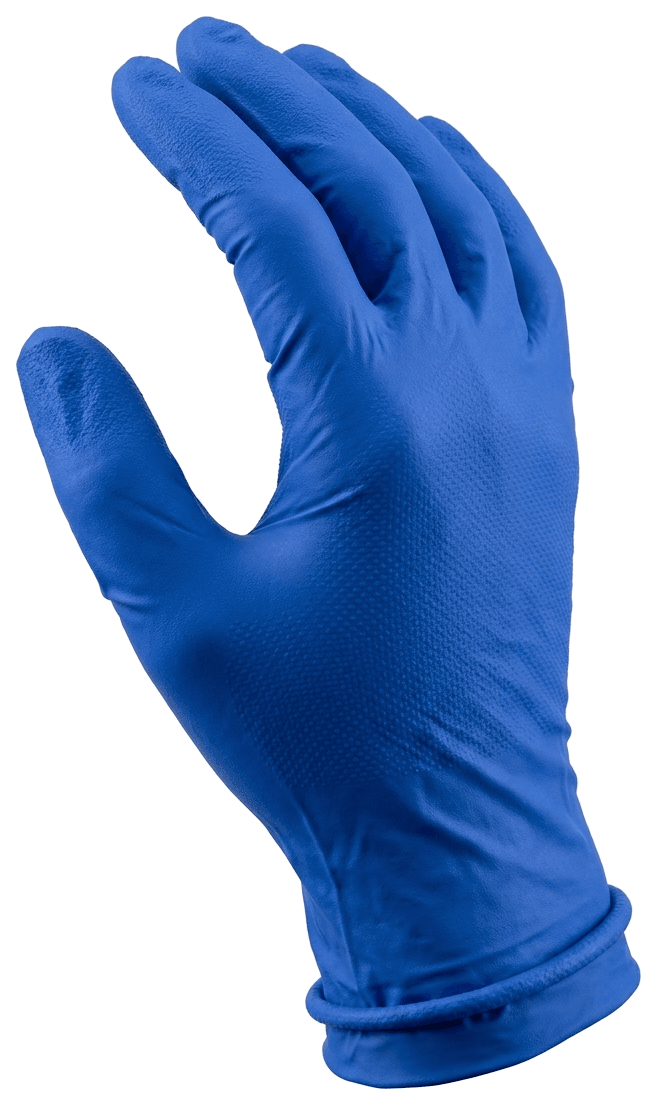 100% Latex-FreeAQL 1.5
Nitrile Examination Gloves
Zero latex proteins, 3× puncture resistance, micro-textured fingertips for wet/dry grip, and ASTM D6978 chemotherapy drug permeation resistance.
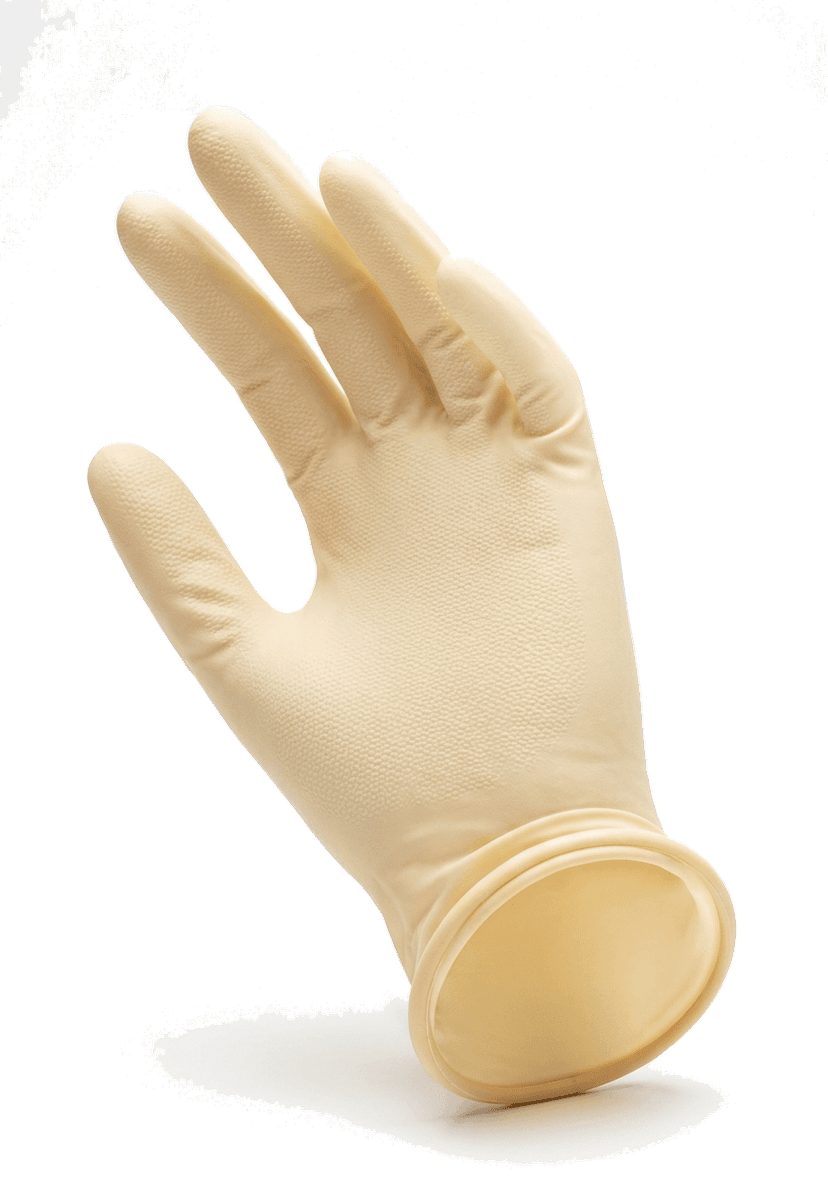 Low Protein < 50 µg/dm²AQL 1.5
Latex Examination Gloves
Natural rubber comfort with unrivaled 700%+ ultimate elongation, minimal tensile modulus, and organic tactile feedback for prolonged procedures.
Request a Clinical Sample Box for Your Facility
Accredited hospitals, surgical nursing homes, dental clinics, and diagnostic centers can request a complimentary evaluation sample pack containing both Nitrile and Latex examination gloves across XS–XL sizes.
Frequently Asked Clinical Questions
Key considerations when updating hospital standard operating procedures (SOPs).
Why do modern hospital infection control committees mandate Nitrile as the baseline examination glove?
Emergency admissions, acute trauma cases, and routine outpatient consultations rarely allow time for exhaustive latex allergy history screening. Because Type I IgE natural rubber latex reactions can trigger rapid anaphylaxis, universal nitrile deployment eliminates patient liability and protects clinical staff from chronic occupational sensitization.
Can healthcare workers with confirmed Type IV contact dermatitis safely wear Nitrile?
Not necessarily. Type IV allergy is triggered by chemical accelerators (dithiocarbamates, mercaptobenzothiazoles, thiurams) used in the vulcanization process of both latex and standard nitrile. Clinicians with documented Type IV dermatitis should use specifically certified accelerator-free nitrile gloves.
Why does Nitrile tear immediately upon puncture while Latex does not?
Nitrile's cross-linked synthetic polymer has lower internal elasticity and higher tear propagation once breached. While this destroys the glove, it serves as a critical safety feature: it immediately warns the practitioner of a barrier breach so they can decontaminate and change gloves, whereas latex pinholes can remain hidden and leak infectious fluids.
Can Latex gloves be used for handling cytotoxic chemotherapy drugs?
No. Natural rubber latex is readily permeated by antineoplastic agents such as carmustine and thiotepa. Chemotherapy preparation and administration strictly require gloves tested to ASTM D6978, which is overwhelmingly satisfied by high-barrier synthetic nitrile.
How does AQL 1.5 testing guarantee barrier integrity?
AQL (Acceptable Quality Level) 1.5 is the international clinical benchmark under EN 455-1 and ASTM D5151. Randomized sample batches are filled with 1000 ml of water under hydrostatic pressure and inspected for pinhole leaks, ensuring a statistical defect rate of less than 1.5% across production lots.